In accordance with Provincial legislation through the Ministry of the Solicitor General, as part of the Community Safety and Policing Act, 2019 and the Safer Ontario Act (2018), municipalities are required to develop and adopt a Community Safety and Well-Being Plan (CSWB). The legislation specifies working in partnership with a multi-sectoral advisory committee comprised of representation from the police service board and other local service providers in health/mental health, education, community social services and children/youth services.
The Provincial CSWB Planning Framework was released by the Ministry of the Solicitor General and outlines the provincial approach to community safety and well-being4. The framework, consisting of four levels of community safety planning intervention (Social Development, Prevention, Risk Intervention and Incident Response), is intended to guide municipalities, First Nations communities and partners in developing local plans. According to the Ministry of the Solicitor General, developing and implementing strategies that are proactive and focused on social development, prevention and early intervention reduce the financial burden of crime.
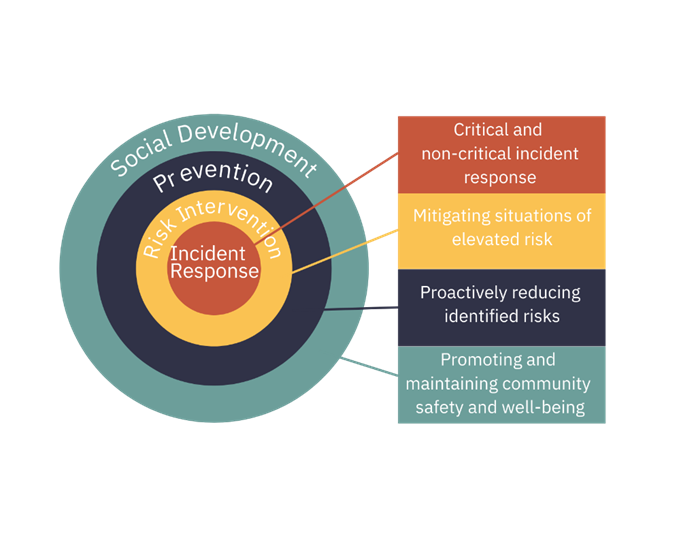
Social Development: Addressing the underlying causes of social issues through upstream approaches that promote and maintain individual and community wellness. This includes opportunities for employment, income, adequate housing, access to education and other supports that promote social and economic inclusion.
Prevention: Applying proactive strategies to known and identified risks that are likely to result in harm to individuals or communities if left unmitigated.
Risk Intervention: Identifying and responding to situations of acutely elevated risk and mobilizing immediate interventions before an emergency or crisis-driven response is required.
Incident Response: Circumstances that require intervention by first responders such as police, paramedics and other crisis-driven services in the human services system.