Emergency Preparedness Week

Before an emergency happens, it’s important to make sure you have a plan in place for your household. Follow the steps below to:

Know the Risks

Being aware of the hazards in your community can help you develop your own emergency plan. Consider the likelihood and consequences of various risks where you live, work, and play and then plan accordingly. In Lambton, the following hazards may be more prevalent:

  • Air Quality
  • Chemical Release
  • Civil Disorder
  • Cyber or AI Incident
  • Farm Animal Disease
  • Extreme Heat
  • Flooding
  • Hazardous Materials in Transit
  • Infectious Disease
  • Electric Energy Failure
  • Oil or Natural Gas Release
  • Rail Incident
  • Road and Highway
  • Severe Summer Weather
  • Structural Integrity
  • Substance Use and Overdose
  • Terrorism or Sabotage
  • Water Quality
  • Winter Weather

Make a Plan

Record the important details of your emergency plan using the format that works best for you, whether on paper or digitally. Make sure to include a copy of your plan in your emergency kit and share it with those in your household.

Be sure to include the following elements in your home emergency plan:

  • Names and triplicate contact information (i.e., cell phone, home phone, social messaging, email) for each family member.
  • Evacuation Plan with:
    • Two ways out of your home
    • Location of your emergency kit
    • Safe meeting areas near your home and in your neighbourhood.
    • Emergency numbers (including 9-1-1):
      • Police
      • Fire
      • Family Doctor
      • Dentist
      • Telehealth
      • Poison Control
      • Insurance
      • Relatives and Friends (local and out-of-town)
      • Utilities
      • Utility shut-off procedures

When your plan is ready:

  • Review it with family members and other close contacts
  • Keep your plan in an easy-to-access location.
  • Review it annually (it is good practice to review your plan the same time you refresh your 72-hour kit).

Several hazards could lead to local officials advising residents to shelter-in-place. If you are advised to shelter-in-place:

Shelter

  • Bring all people and pets inside and stay inside

Shut

  • Close all windows and secure doors (locking provides a tighter seal)

Stay Tuned

  • Sign-up for Sarnia-Lambton Alerts.
  • Call the Lambton BASES Hotline at 226-778-4611
  • Connect with your local municipality for updates
  • Monitor local radio broadcasts (1070 AM/103.9 FM CHOK)

Continue to shelter-in-place until the "all clear" is given by your local municipality.

Evacuation advisories are issued when it is more dangerous to stay in place than it is to leave.

During evacuation advisories, monitor Sarnia-Lambton Alerts and listen to your radio for instructions. Keep the following information in mind:

  • Wear long-sleeved shirts, long pants and sturdy shoes so you can be protected as much as possible.
  • Take your emergency supplies kit.
  • Take your pets with you.
  • Lock your home.
  • Collect family members or go to the place designated in your family plan as a meeting place.
  • Use travel routes specified by local authorities. Don't use shortcuts – certain areas may be impassable or dangerous.
  • Stay away from downed power lines.
  • If you go to an evacuation centre, sign up at the registration desk so you can be contacted or reunited with family and friends who will be looking for you.
  • Contact your out-of-area emergency contact to let them know what has happened, that you are okay, and how to contact you.
  • Leave natural gas service ‘on' unless local officials advise you otherwise.

Assemble a Kit

72-Hours

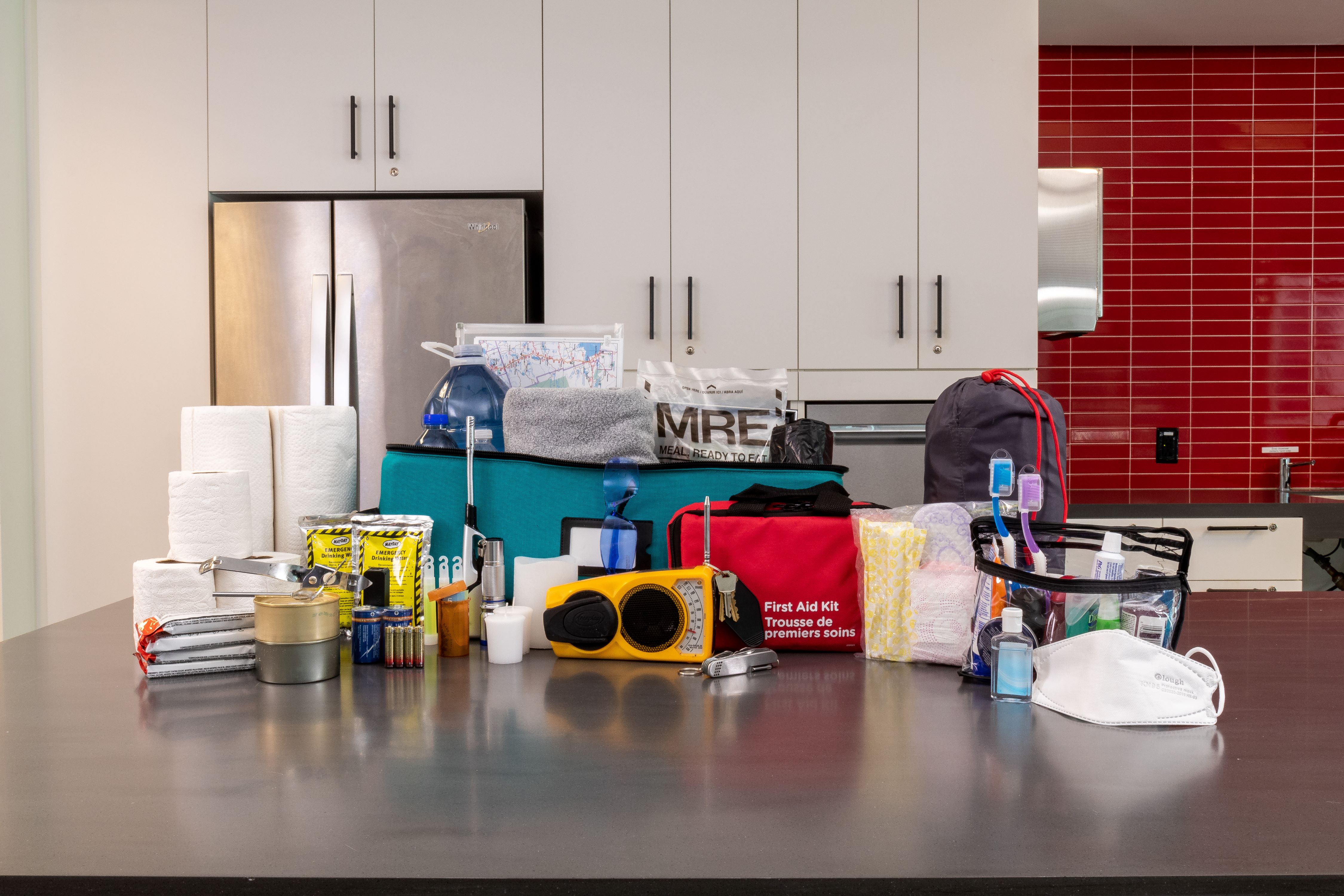
72-Hour KitOne of the best ways you can prepare for emergencies is to have enough supplies at home to feed and care for you and your family for at least three days following a crisis or disaster. This is called a 72 Hour Emergency Supplies Kit (or 72-Hour Kit). Include the following items for each family member:
  • Backpack or small suitcase (for supplies)
  • First-aid kit
  • Prescription medications.
  • Change of clothing
  • Candles or matches, lighter
  • Sleeping bag or bed roll
  • Personal hygiene items
  • Phone charger and power bank
  • Portable lights
  • Batteries
  • Emergency radio
  • Hand sanitizer
  • Garbage bags
  • Duct tape
  • Zip-lock bags (to keep things dry)
  • Non-perishable food (replaced yearly)
  • Manual can-opener
  • Bottled water (4 litres per person per day)
  • Copies of important documents
  • Whistle
  • Playing cards, games
  • Toilet paper
  • Extra car and house keys
  • Extra cash
  • “Special needs” items for any member of your household (i.e. baby formula, diapers, prescription medication etc.)

Prepare for emergencies on the road, too. Include the following supplies in your vehicle’s emergency kit:

  • Food pack
  • Drinking water
  • Flashlight
  • Blanket
  • First-aid kit
  • Extra winter clothing, hats and boots
  • Matches, candles.
  • Cell phone charger or power bank

Keep a shovel, sand, tow chain, booster cables, and warning lights/flares in your trunk, particularly for winter travel emergencies.

Dog in a fieldJust as you should prepare an emergency supplies kit for you and your family, prepare an emergency kit for your pet(s) to keep them comfortable for at least seven days. This kit should be stored in an easy to carry duffle bag or container next to your own emergency kit. Include the following items:

  • Food and water for seven days.
  • Bowls, paper towel and a manual can opener
  • Blanket
  • Small toy or chew toys
  • Sturdy leash and harness
  • Scoopable litter or a week's worth of cage liner
  • Long leash and yard stake
  • Litter/pan and plastic bags
  • Carrier for transport
  • Medications and medical records (including vaccination records)
  • Current photo of your pet (in case your pet gets lost)
  • Pre-written information on feeding schedules, special needs or medical or behavioural problems
  • Up-to-date ID tag with your phone number and the name/phone number of your veterinarian
  • Copy of license
  • Muzzle

Stay Informed

Watches and Warnings

Woman using a cellphoneEnvironment and Climate Change Canada (ECCC) uses colour-coded alerts to advise the public on the level of risk a weather event poses to their community.

  • Yellow: hazardous weather may cause damage, disruption, or health impacts. Impacts to a community are expected to be moderate, localized, and/or short term.
  • Orange: severe weather is likely to cause significant damage, disruption or health impacts. Impacts to a community are expected to be major, widespread, and/or may last up to a few days.
  • Red: very dangerous and possibly life-threatening weather will cause extreme damage and disruption. Impacts to a community are expected to be extensive, widespread, and prolonged.

When a weather watch is issued, it means conditions are favourable for severe weather to develop later in the day. Monitor weather conditions and watch for updates. Be prepared to act if severe weather develops.

When a weather warning is issued, severe weather is imminent or occurring. Take immediate safety precautions.

Sarnia-Lambton Alerts

Sarnia-Lambton Alerts, powered by Everbridge, Inc., is an advanced regional emergency notification tool used by local municipalities to communicate shelter-in-place, drinking water, evacuation, and other urgent public safety advisories to the community. Sarnia-Lambton Alerts also includes emergency and non-emergency updates from local industrial sites. Sign up today to receive notifications through the method(s) of your choice (e.g., text, phone call, email, app).

Alert Ready

Alert Ready is Canada’s emergency alerting system. Alert Ready delivers critical and potentially life-saving alerts to Canadians through television, radio and LTE-connected and compatible wireless devices. Visit AlertReady.ca for more information.

Helpful Resources
Contact Us

City Hall
123 Conestoga Drive
Glasgow G1 5QH

111-222-3333
mail@example.com

Sign up to our Newsletter

Stay up to date on the city's activities, events, programs and operations by subscribing to our eNewsletters.