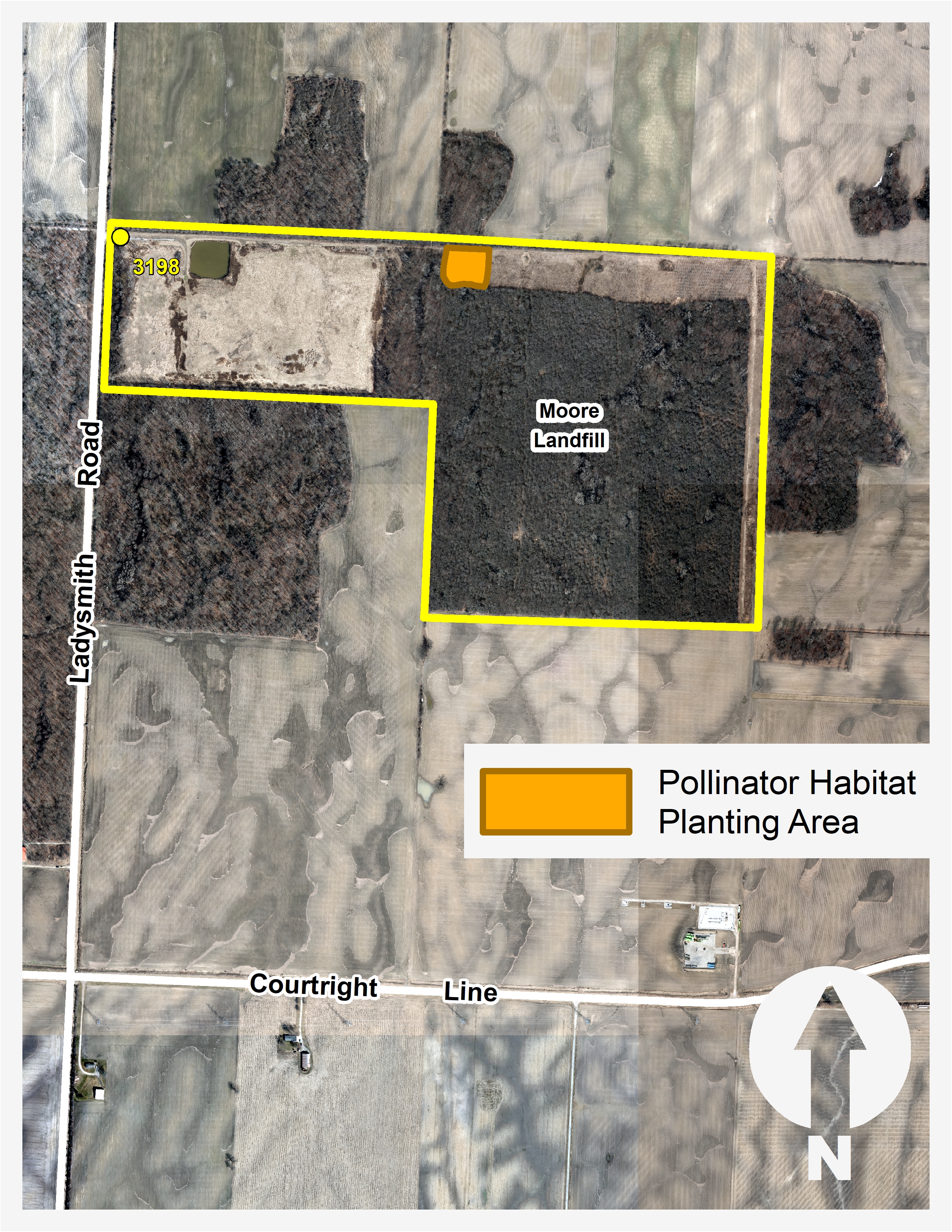
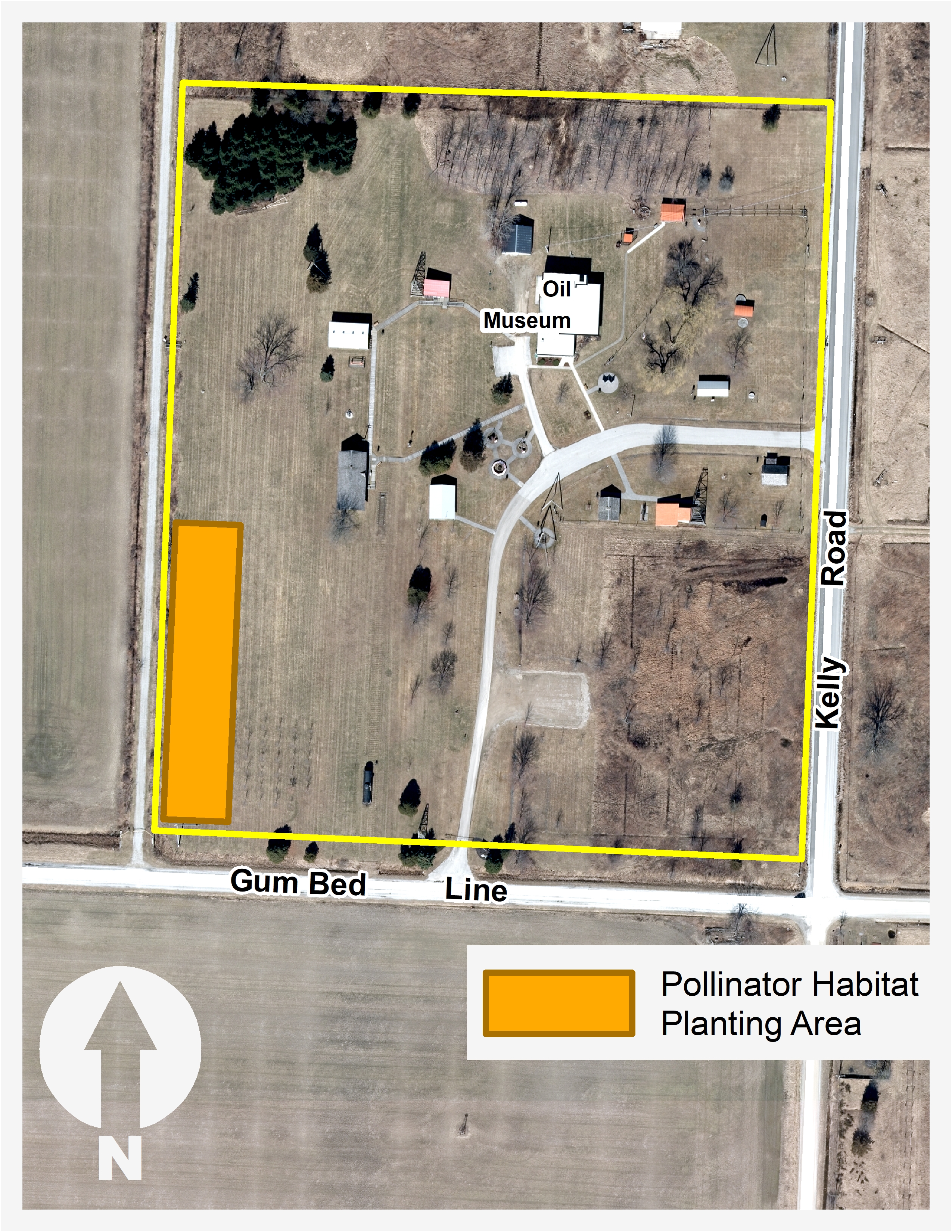
- 0.4 hectares (1 acre) in area.
Lorem ipsum dolor sit amet, consectetur adipiscing elit. Morbi at nibh rhoncus, tempor magna non, feugiat nisi.
Alert Popup One
Nunc pede ad dolor feugiat erat leo lectus dictumst enim. Velit pulvinar tempor senectus ultricies sodales montes convallis rhoncus. Enim montes dapibus nec porta finibus aliquet ex ipsum lacus.
Lobortis litora euismod quisque curae aptent turpis erat suspendisse eros dolor cursus. Donec phasellus faucibus maecenas maximus curabitur ut inceptos lacinia ornare rhoncus. Sagittis finibus euismod fringilla netus dignissim.
Mauris si fermentum nostra non ut elit fusce volutpat pulvinar sagittis. Praesent libero litora augue faucibus donec mus si feugiat facilisi. Hendrerit nullam aenean est nec morbi duis congue pretium adipiscing. Enim rutrum viverra sodales libero sit hac massa. Natoque dictum neque ligula class maecenas nostra nascetur. Pellentesque nisl malesuada platea maecenas lectus aptent tellus. Placerat facilisis fusce at quis scelerisque nostra aliquam letius aenean augue.
Alert Popup Two
Condimentum tempus vel sapien cursus est id a. Odio donec tortor suspendisse consectetuer auctor nunc iaculis ridiculus. Maecenas phasellus taciti imperdiet gravida lacinia odio accumsan.
Pharetra risus vulputate dignissim rutrum parturient sagittis efficitur nam tellus mi. Magna dignissim maximus hendrerit letius quam sem. Ante euismod curae nec nostra a lorem. Pharetra in magnis vel pede risus dignissim malesuada felis lobortis tincidunt ad. Facilisi ante condimentum eleifend scelerisque velit libero magna orci.
Parturient vehicula mattis etiam viverra donec vestibulum. Eleifend mollis dictum gravida a sit cras. Mus praesent velit magnis ex cursus auctor dis cras donec at.
Approximately 75% of flowering plants depend on pollinators, including most of our fruits and vegetables. Canada is home to over 1000 species of pollinators, but these populations are threatened, partially due to urban development and the resulting fragmentation and depletion of natural areas. Without pollinators we would lose foods including apples, blueberries, strawberries, peaches, chocolate, almonds and pumpkins.
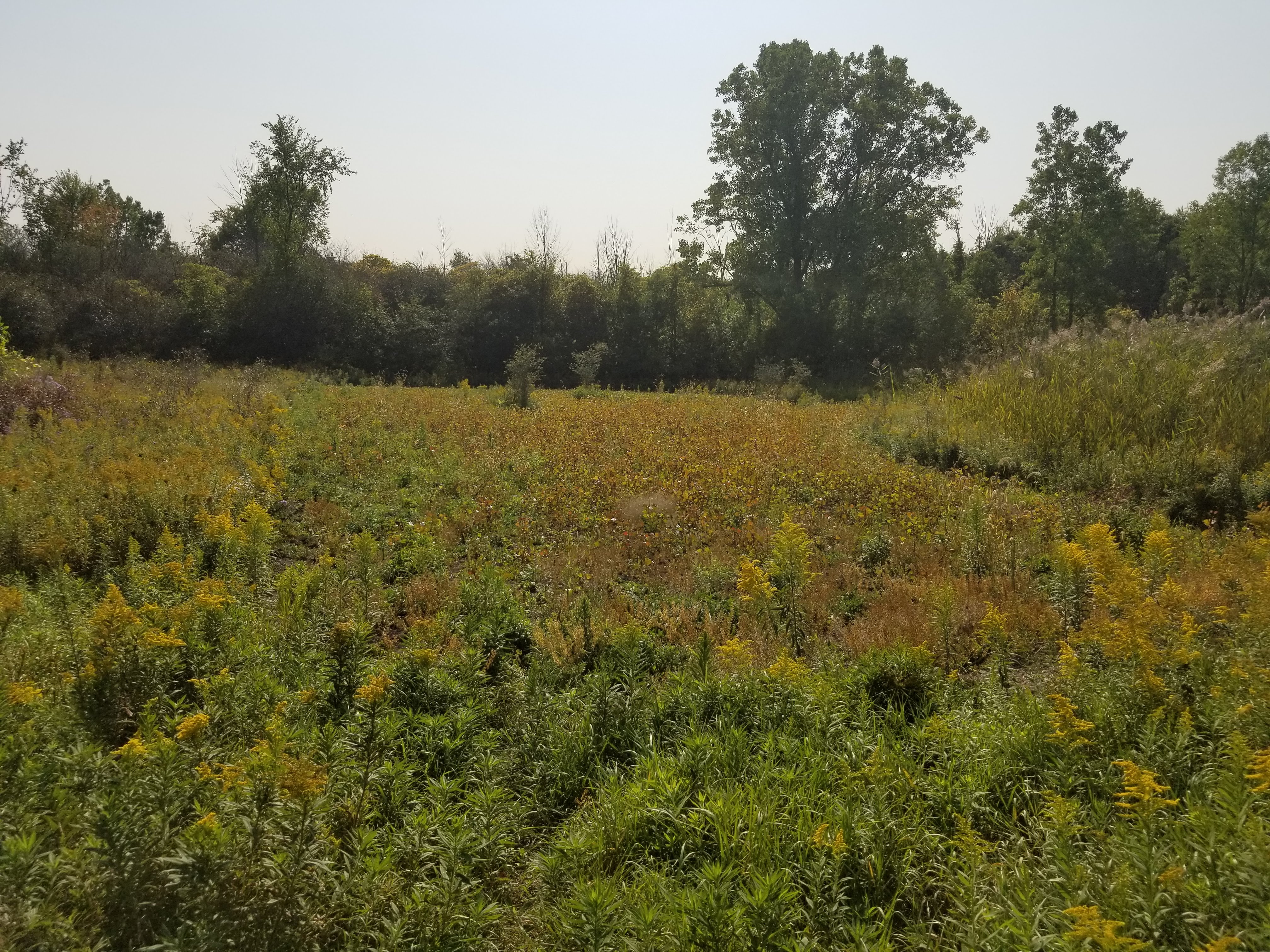
Pollinator habitats play an important step in protecting local pollinator species, and healthy, local food production for generations to come. Habitats are home to a wide variety of pollinators like hummingbirds, butterflies, moths, bees, flies and beetles. The native plants provide the nectar, pollen, larval food and shelter that these pollinators need to survive.
Without pollinators providing pollen, many plants could not set seed and reproduce; and consequently many animal populations and species would die out. This has serious economic implications for humans and for native eco-system diversity and stability.
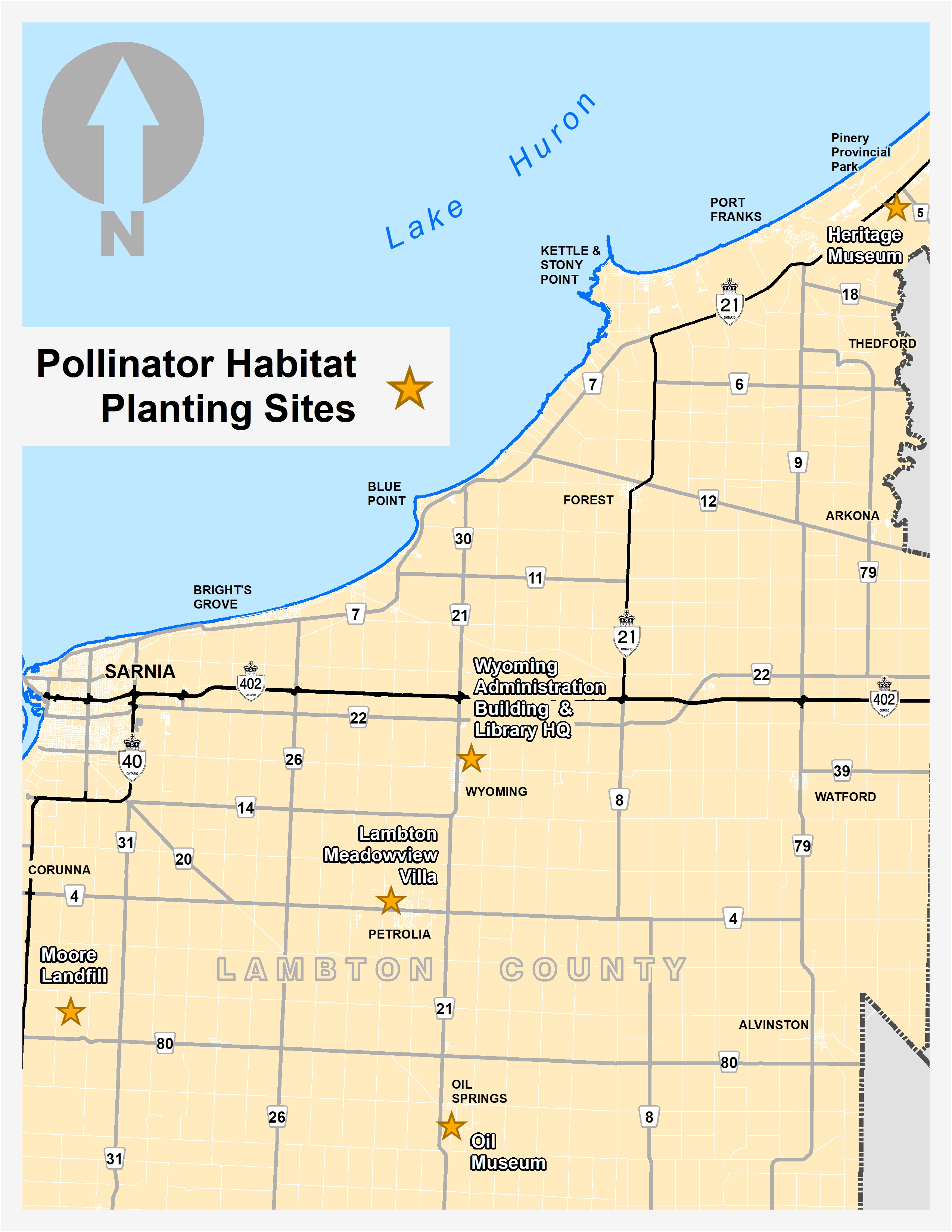
There are currently 5 pollinator habitats located throughout the County of Lambton:
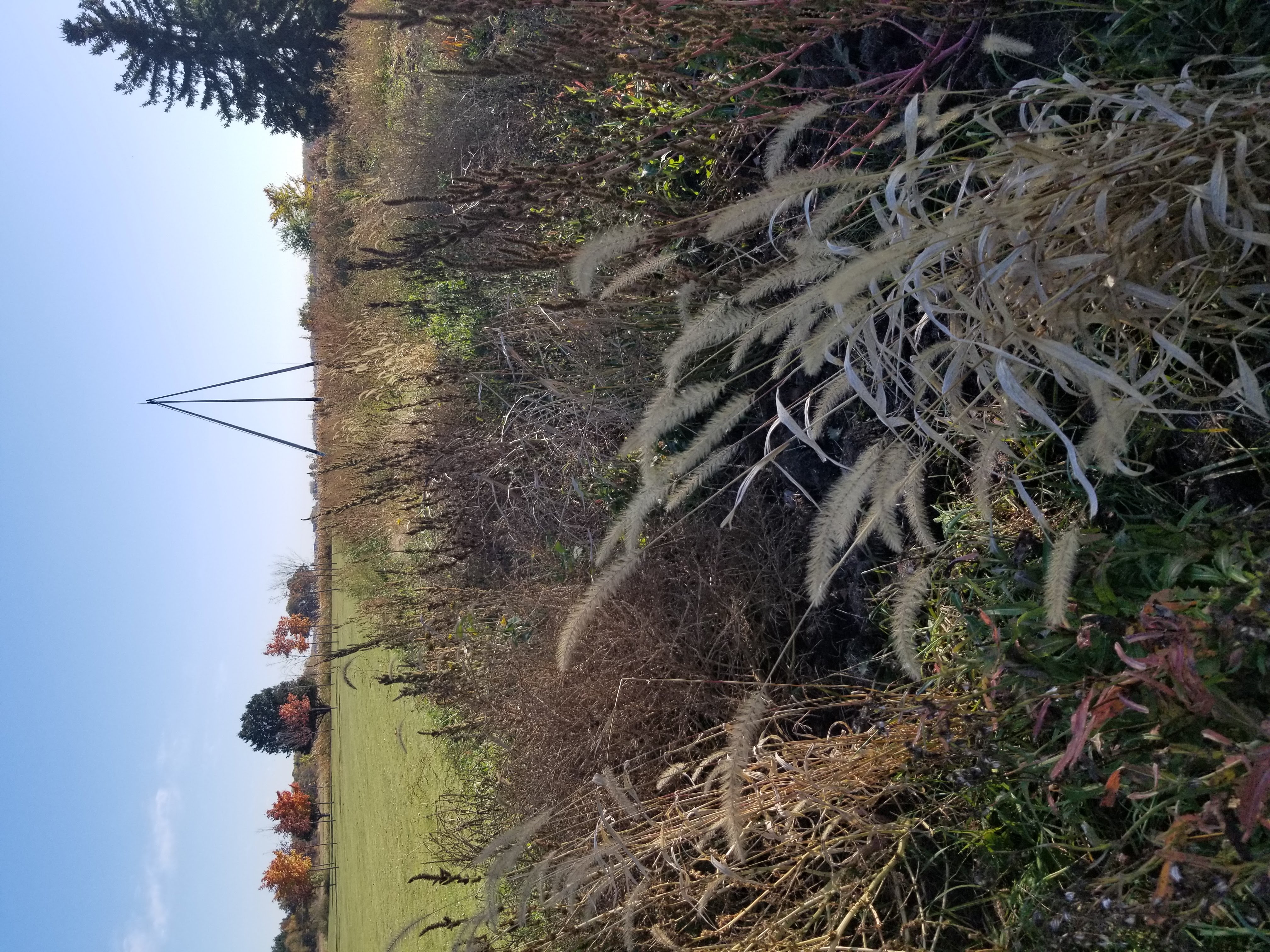
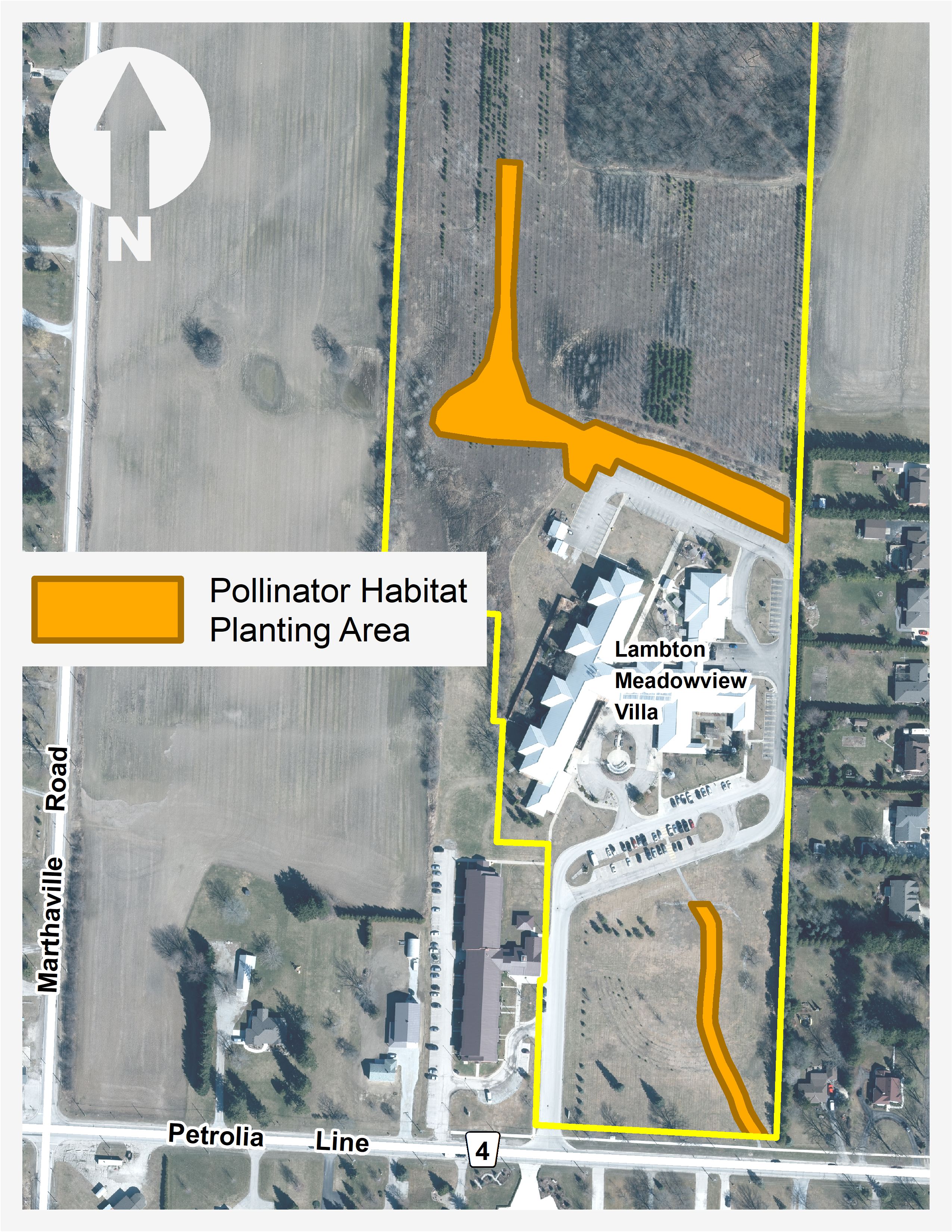
Lambton Meadowview Villa Lands
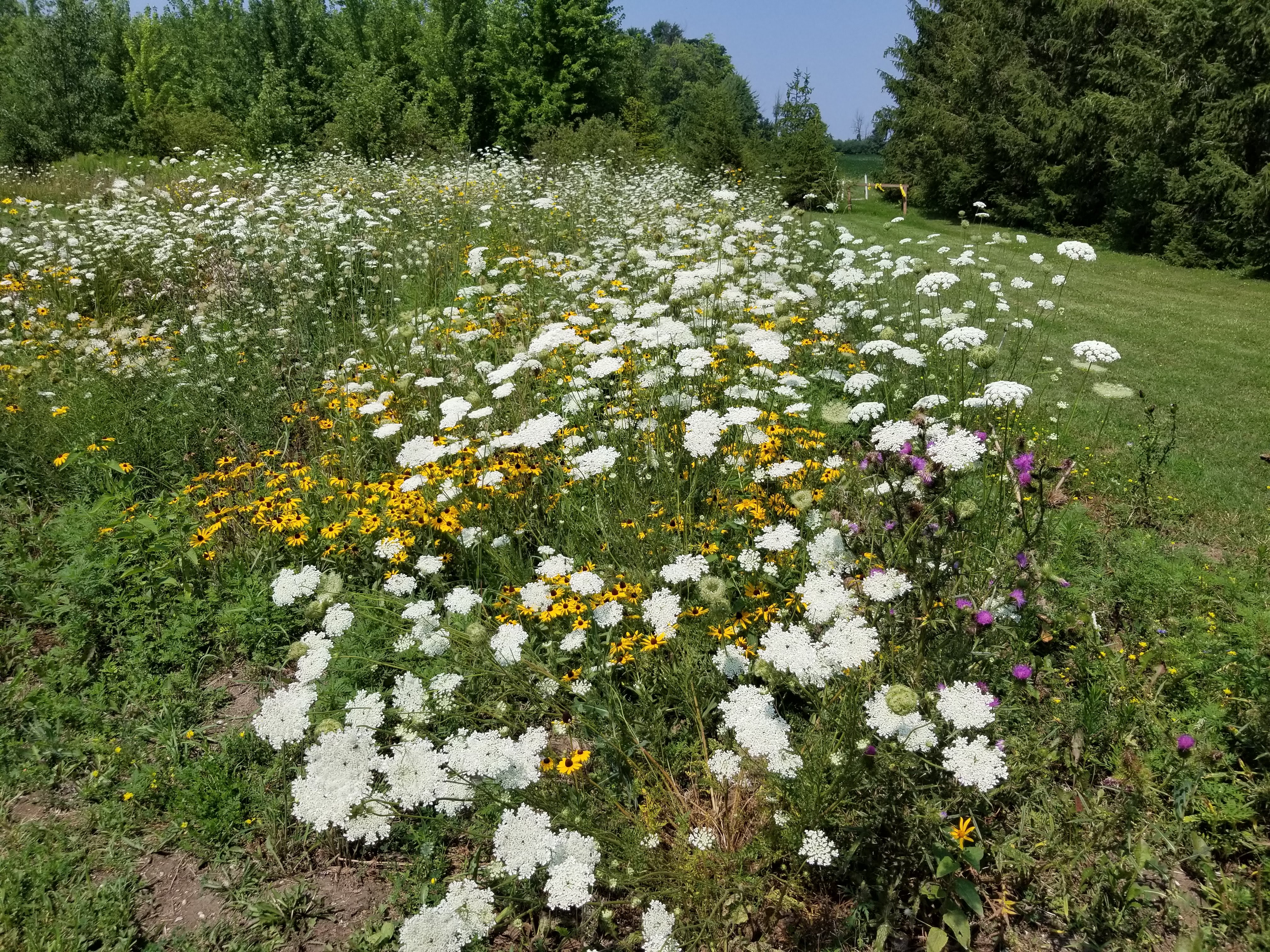

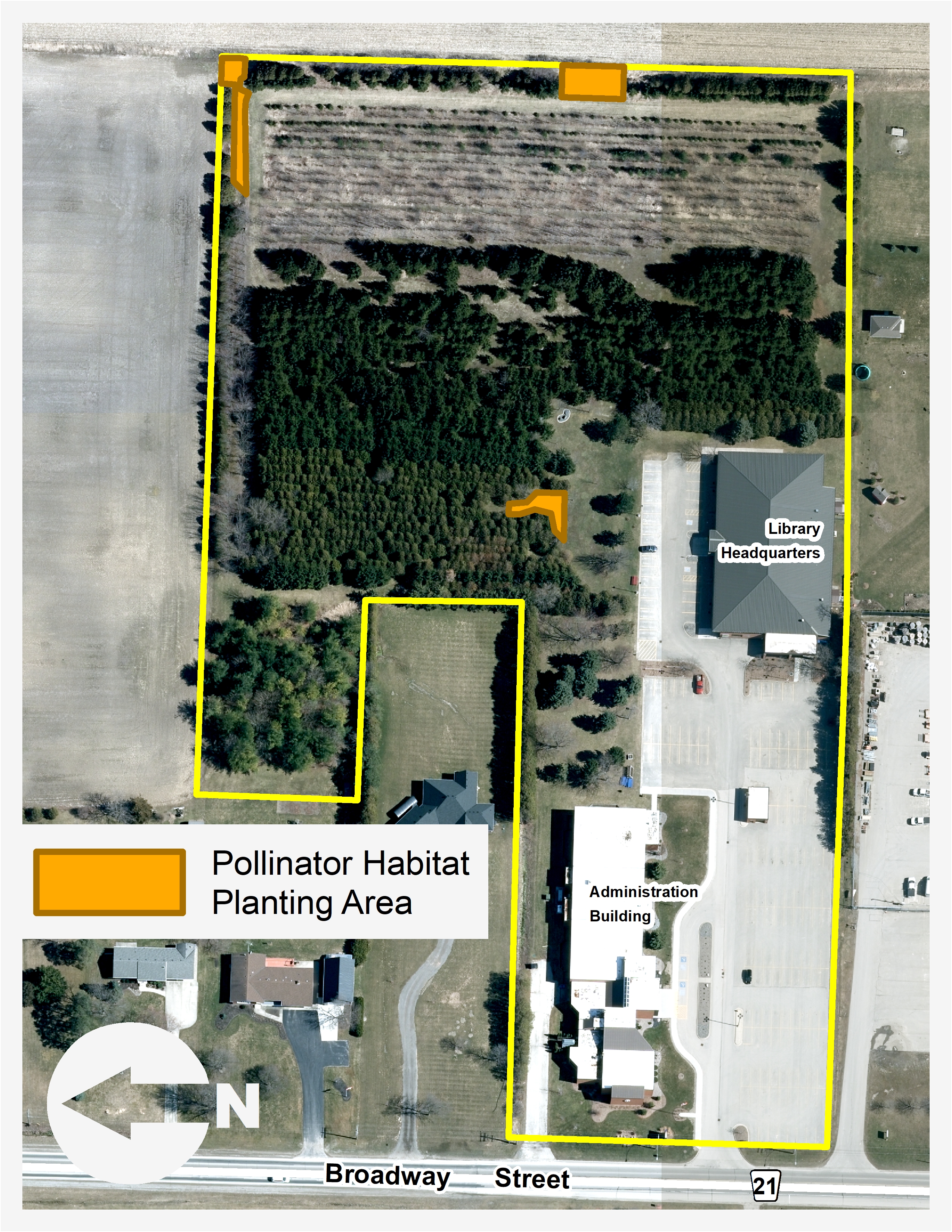
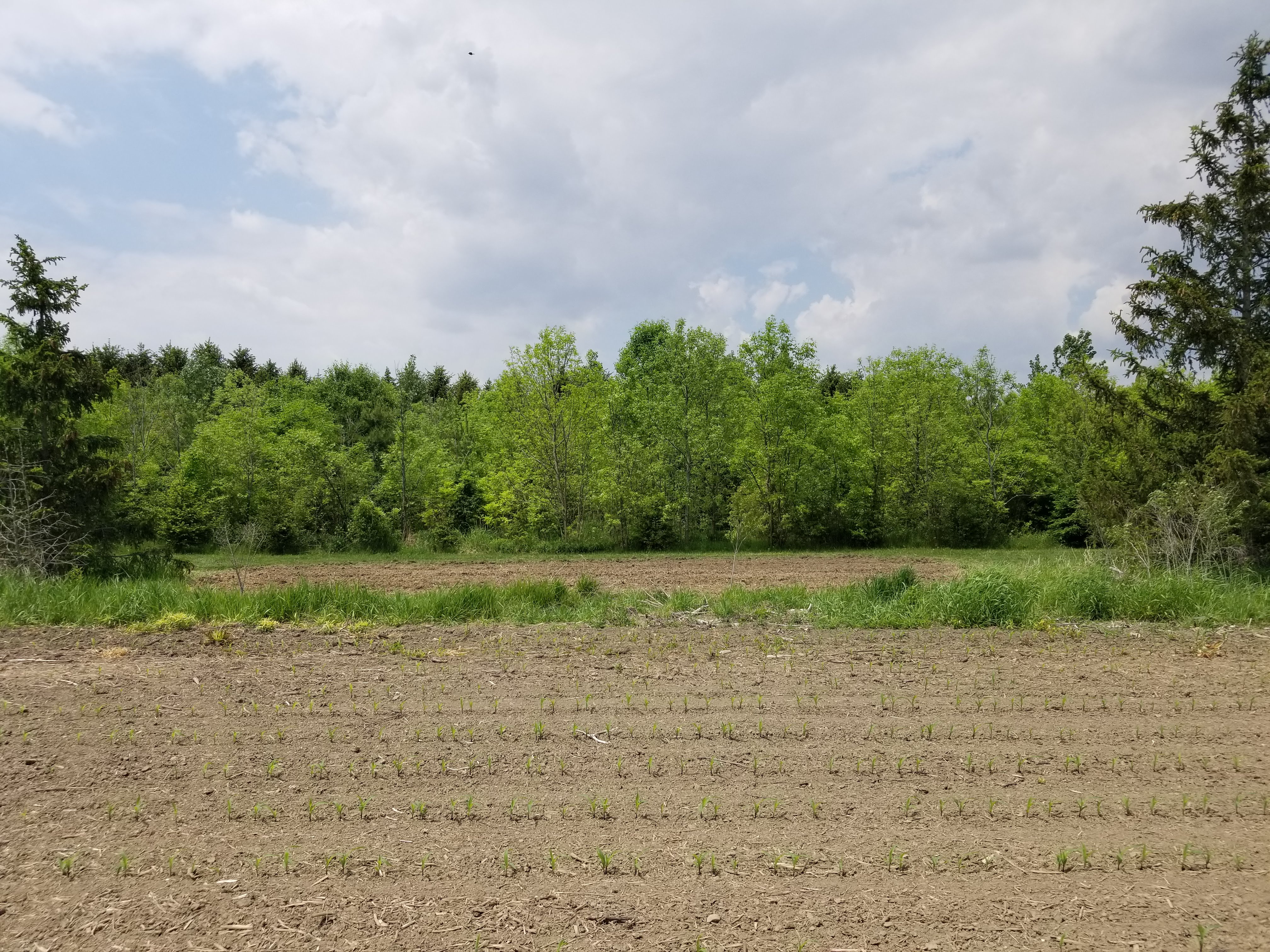
Each County pollinator habitat contains a large variety of species of wild flowers and grasses within. Some of the most common include:
Grasses:
Angropogon gerardii (Big Bluestem)
Big Bluestem, Tall Bluestem, Turkeyfoot
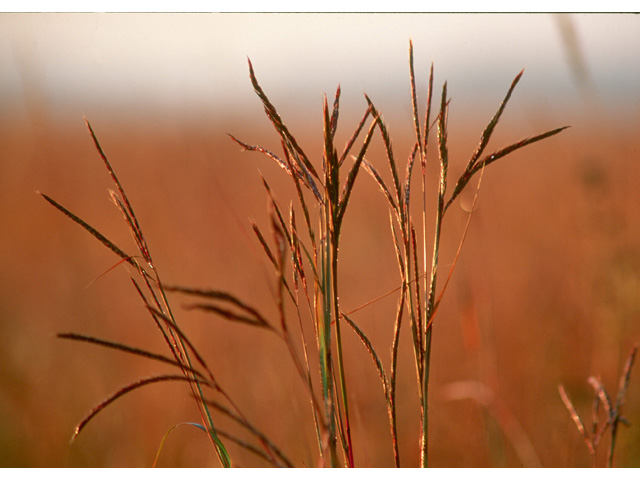
Big Bluestem is a warm season, perennial bunchgrass with blue-green stems 4-8 ft. tall. The seedhead is usually branched into three parts and resembles a turkey’s foot. Fall color is maroonish-tan.
Big Bluestem is the star component of the Big Four native grass species that characterize the tallgrass prairies of central North America (the other three are Indiangrass [Sorghastrum nutans], Switchgrass [Panicum virgatum], and Little Bluestem [Schizachyrium scoparium]). It tends to be taller than the other species and was at one time very abundant. It can still get quite aggressive when it's established in a favorable, undisturbed location, but overgrazing and land destruction have reduced it to mere patches of its former range. Part of the problem is that cattle love it so much - some ranchers refer to it as ice cream for cows - and it cannot take concentrated grazing; the seasonal grazing of migratory bison is what its evolved to cope with.
Elymus virginicus (Virginia Wild Rye)
Virginia Wild Rye, Virginia Wildrye
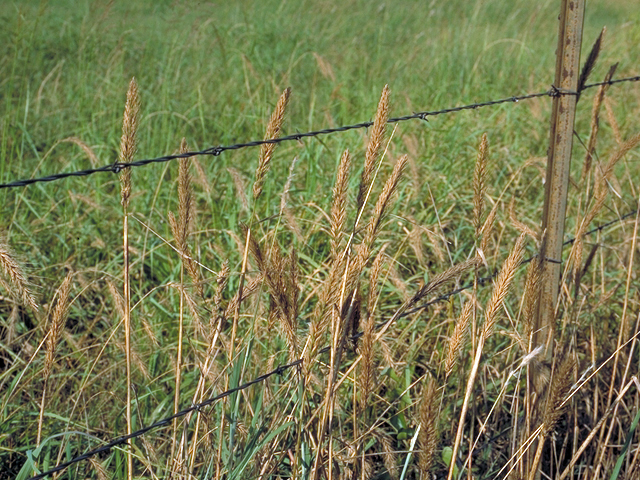
Flat, linear, pointed leaf blades (to 3/8” wide) appear in tufts rising to 12” tall. Non-showy greenish flowers bloom in June on stiff, terminal, arching, bristly, wheat/rye-like flower spikes (to 6” long) located atop flowering stems (culms) rising above the foliage to 4’ tall. After bloom, the mature flowering spikes with developing seeds continue to provide ornamental interest as they gracefully nod and sway in the wind throughout summer and early autumn. Foliage and seed spikes turn tan in fall.
Best grown in moist, relatively fertile, well-drained loams in full sun to part shade. Perhaps best in light shade. Tolerates a wide variety of soils. Easily grown by seed. This grass is considered to be a superb plant for erosion control (e.g., stabilizing wooded hillsides and streambanks). Reproduces by tillering and seed.
Schizachyrium scoparium (Little Bluestem)
Little Bluestem, Popotillo Azul
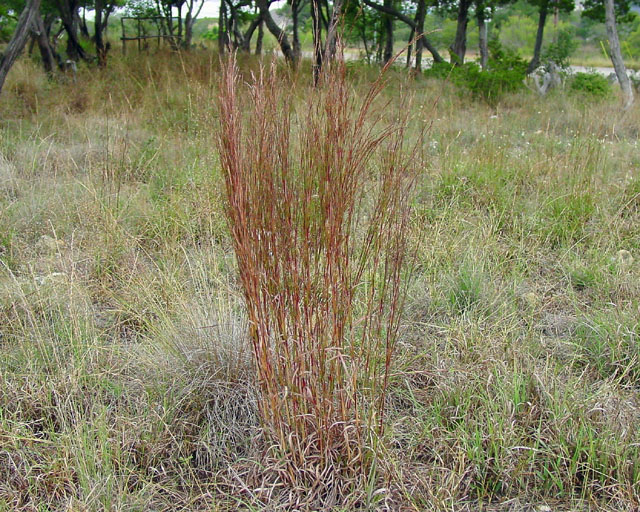
Little bluestem is a very ornamental bunchgrass with fine-textured foliage that forms very dense mounds 18-24 inches tall. Slender blue-green stems reach 3 feet by September, and become radiant mahogany-red with white, shining seed tufts in the fall. Color remains nearly all winter. Perennial clumps grow up to a foot in diameter.
This mid-prairie species gets its name from the bluish color of the stem bases in the spring, but most striking is the plants reddish-tan color in fall, persisting through winter snows. The seeds, fuzzy white at maturity, are of particular value to small birds in winter. A related species, Big Bluestem or Turkeyfoot (Andropogon gerardii), has finger-like seed heads that somewhat resemble a turkeys foot. It reaches a height of 12 feet in favorable bottomland sites and is also one of the Easts most important native prairie grasses.
Sorghastrum nutans (Indiangrass)
Indiangrass, Yellow Indiangrass
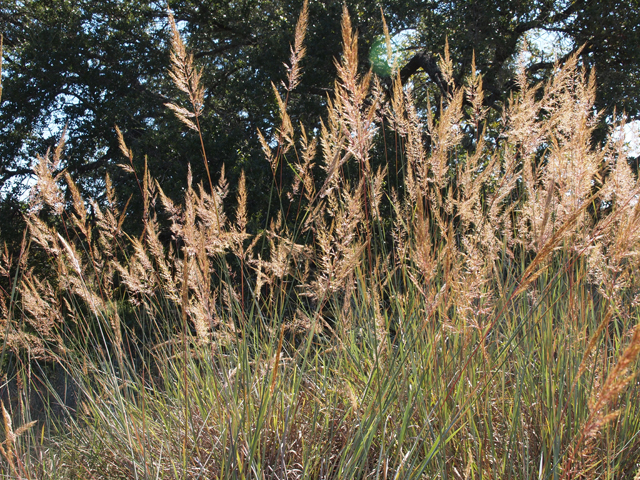
Yellow indian grass is a tall, bunching sod-former, 3-8 ft. in height, with broad blue-green blades and a large, plume-like, soft, golden-brown seed head. This showy perennial’s fall color is deep orange to purple.
This is a beautiful grass with a somewhat metallic golden sheen to its flowering parts. It is an important associate in the tallgrass prairies and is relished by livestock. It appears to be favored by occasional flooding and repeated burning and sometimes forms nearly pure stands in the lowlands. Warm-season grass with rich gold-and-purple sprays of flowers and seeds in the fall. (Ontario Native Plants 2002)
Wild Flowers:
Coreopsis lanceolata (Lanceleaf Coreopsis)
Asteraceae (Aster Family)
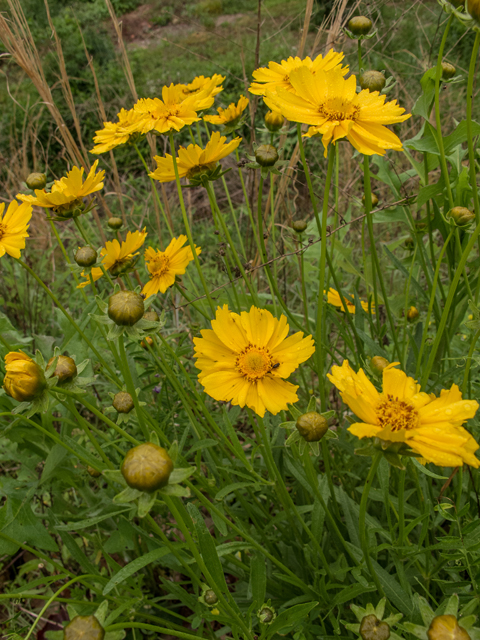
Lance-leaf tickseed grows in small clumps but forms extensive colonies. It is 1-2 1/2 feet tall and has leaves 3-4 inches long, opposite, sometimes alternate near the top where the leaves are fewer. Some of the leaves are deeply cut, almost forming 3 leaflets. Flower heads are yellow, 1-1 1/2 inches across. The yellow center or disk flowers stand out distinctly from the ray flowers, which appear to be attached just below them. Ray flowers are 4-lobed. The yellow, daisy-like flowers occur singly atop long, naked peduncles.
This native species has branching stems at base and often forms sizable colonies along roadsides and in old fields. A southern species, Greater Tickseed (C. major), 2-3 (60-90 cm) tall, has sunflower-like flower heads 1-2 (2.5-5 cm) wide and opposite leaves deeply segmented into 3 parts, appearing as a whorl of 6. Nearly a dozen other perennial yellow-flowered Coreopsis species occur in the East.
Coreopsis tripteris (Tall Tickseed)
Asteraceae (Aster Family)
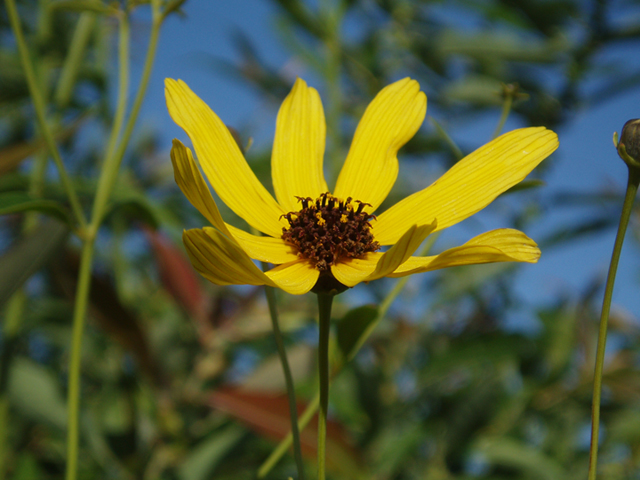
As its name implies, Coreopsis tripteris (Tall Coreopsis) stands quite tall reaching heights of 7' and in some cases up to 9'. Because of its height, it would be best to start with a few plants to form a loose colony. Arranged in a flat-topped cluster, the flowers comprise a disk of yellow, deepening to purple-red. This Coreopsis blooms late-summer and into fall, unlike the spring-summer blooms of Prairie Coreopsis and Lance-leaved Coreopsis. The leaves are divided into three lobes with the lower leaves on the stem being quite large, up to 6". Tall Coreopsis can be aggressive, especially in recently disturbed, moist soils, and therefore may not be suitable for small landscape plantings. Also called Tickseed.
Helianthus giganteus (Giant Sunflower)
Giant Sunflower
Asteraceae (Aster Family)
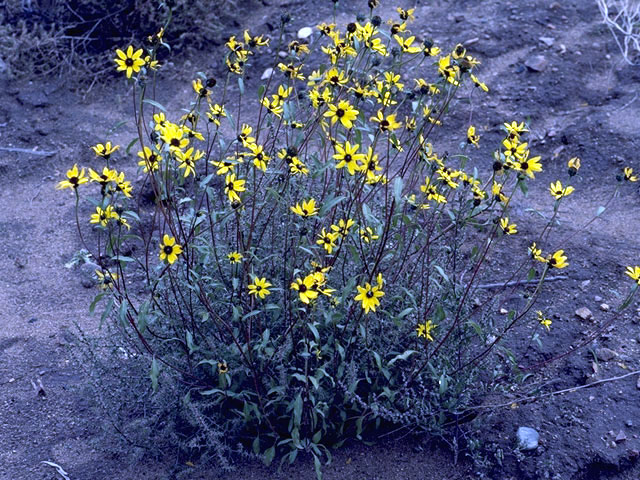
As the name suggests, giant sunflower is a large, showy plant.A tall, rough, reddish stem bearing several to many light yellow flower heads. The branched, purplish stem grows to 10 ft. tall and bears terminal, yellow flowers.
Despite this plants names, its flower heads are comparatively small; the common and species names actually refer to the plants overall height.
Heliopsis helianthoides (Smooth Oxeye)
Asteraceae (Aster Family)
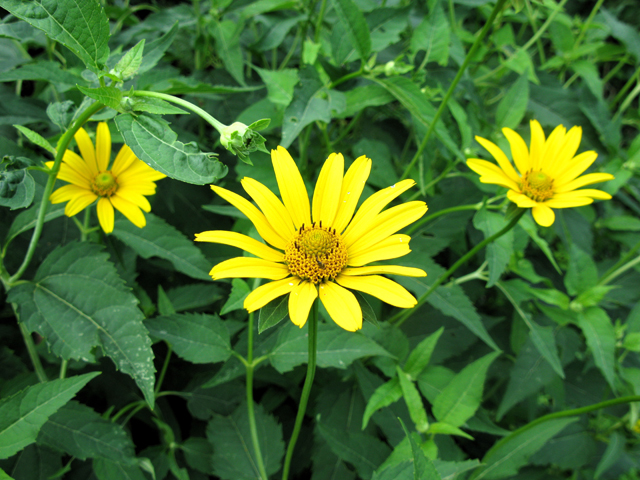
A common, 3-5 ft. perennial with stiff, branched stems; sunflower-like heads; and opposite, toothed leaves. Resembling a small version of a yellow sunflower with a cone-shaped central disk and opposite, toothed, simple leaves. The yellow flower heads are 2 in. across and have raised, yellow centers.
This plant looks like true sunflowers, which are in the genus Helianthus. Unlike sunflowers, its rays persist on the flower heads; the rays of sunflowers wither and fall away. It is placed in Heliopsis due to its cone-shaped central disk. Oxeye is hardy and easily grown as a showy garden perennial in dry sites and is a good choice for clay soil.
Oenothera biennis (Common Evening-primrose, King's Cure-all)
Onagraceae (Evening Primrose Family)
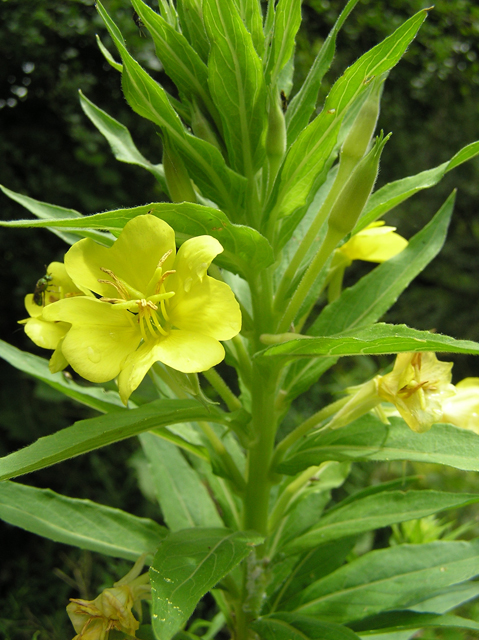
At the top of a leafy stalk bloom lemon-scented, large yellow flowers. Stem hairy, often purple-tinged. King’s cure-all or common evening primrose is an erect, 2-6 ft. biennial with leafy, branched stems from a basal rosette. The bright-yellow, four-petaled flowers, up to 2 inches across, open at night. These fragrant flowers occur in a many-flowered, terminal spike.
The flowers of this night-flowering biennial open in the evening and close by noon. The plant takes 2 years to complete its life cycle, with basal leaves becoming established the first year, and flowering occurring the second. The roots are edible, and the seeds are important as bird feed. Most of the evening-primroses have yellow flowers. Showy Evening-primrose (O. speciosa) has pink or white flowers.
Penstemon hirsutus (Hairy Penstemom, Hairy Beardtongue)
Scrophulariaceae (Figwort Family)
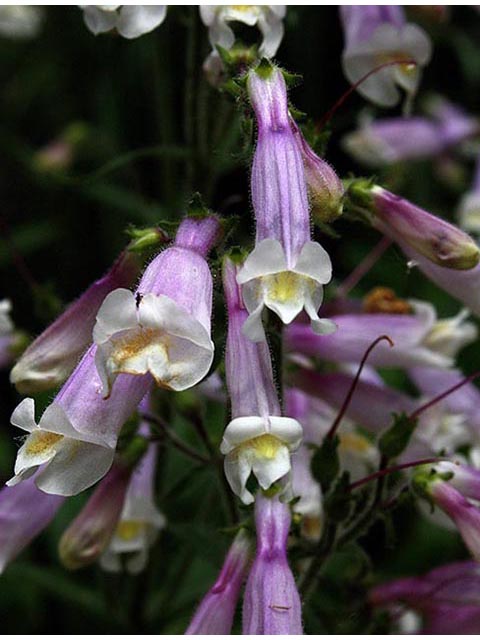
Erect, hairy stems, usually several from the same rhizome, are 16-24 in. tall. Leaves are oblong. A woolly-stemmed plant with open, stalked clusters of lavender, trumpet-shaped flowers with white lips. The tubular, lipped flowers are very slender, about an inch long, and pale-violet flowers. The mouth is nearly closed by the arched base of the lower lip.
The Beardtongues are a very large group, and taxonomically so complex that separating the species is often difficult. This species is readily distinguished, however, by the downy nature of the stem. The common and scientific names refer to the tufted sterile stamen.
Pycanthemum virginianum (Virginia Mountain Mint)
Lamiaceae (Mint Family)
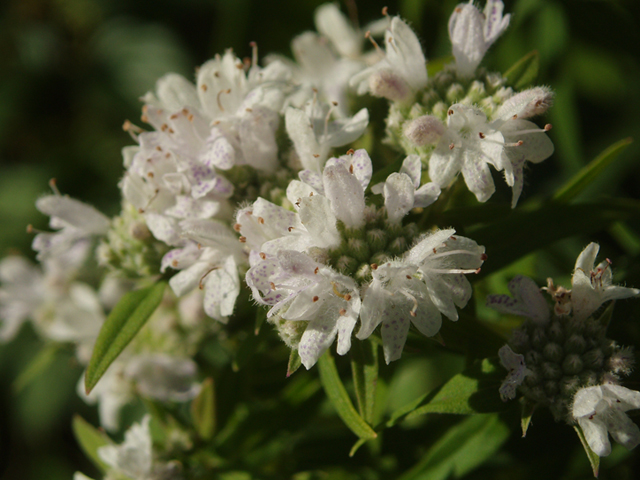
Virginia mountain-mint is a stout perennial, becoming multi-branched toward top of its 2-3 ft. height. Tiny, white, mint-like flowers, often spotted with purple, are arranged in numerous small, dense clusters. The clusters, which bloom only a few at a time, arise from leaf axils at the stem tips. The foliage of this leafy plant is covered with a whitish bloom.
Virginia Mountain Mint is a member of the family Lamiaceae which includes aromatic herbs or shrubs, rarely trees or vines, usually with stems square in cross-section, 4-sided, and flowers in long clusters, heads, or interrupted whorls on the stem. There are about 180 genera and 3,500 species nearly worldwide. The Mediterranean region, the chief area of diversity, has produced many spices and flavorings; various mints, oregano, marjoram, thyme, sage, and basil. Catnip and lavender are in the family.
Rudbeckia hirta (Black-eyed Susan, Common Black-eyed Susan, Brown-eyed Susan)
Asteraceae (Aster Family)
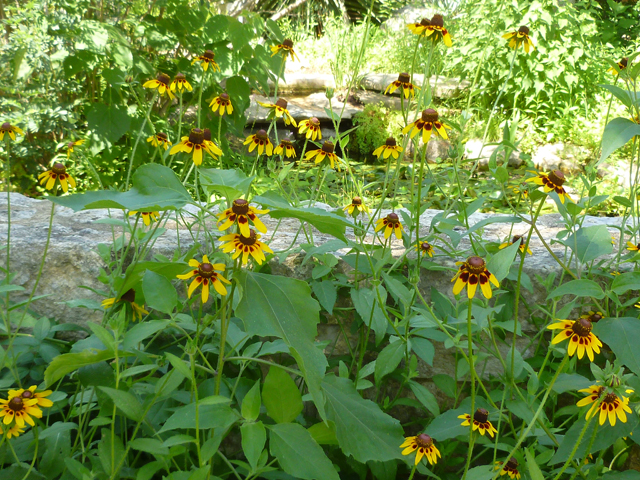
This cheerful, widespread wildflower is considered an annual to a short-lived perennial across its range. Bright-yellow, 2-3 in. wide, daisy-like flowers with dark centers are its claim-to-fame. They occur singly atop 1-2 ft. stems. The stems and scattered, oval leaves are covered with bristly hairs. Coarse, rough-stemmed plant with daisy-like flower heads made up of showy golden-yellow ray flowers, with disk flowers forming a brown central cone.
This native prairie biennial forms a rosette of leaves the first year, followed by flowers the second year. It is covered with hairs that give it a slightly rough texture. The Green-headed Coneflower (R. laciniata) has yellow ray flowers pointing downward, a greenish-yellow disk, and irregularly divided leaves.
Vernonia missurica (Missouri Ironweed)
Missouri Ironweed
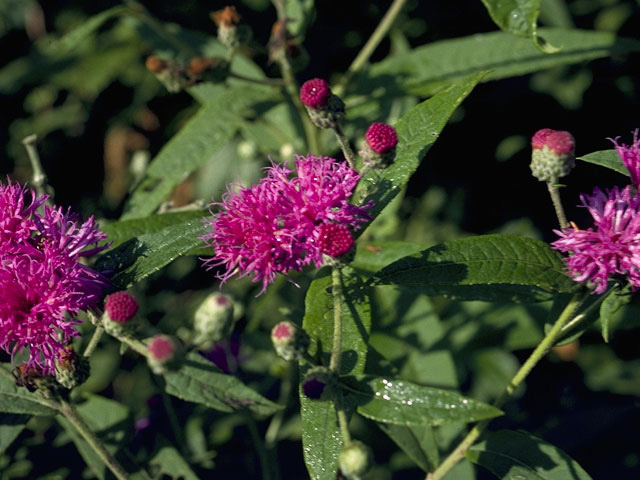
Easily grown in average, medium to wet soils in full sun. Although it is mostly seen growing in the wild in moist soils, with tolerance for periodic flooding, it performs quite well in cultivation in average garden soils. Plants generally grow taller in moist soils. Overall plant height may be reduced by cutting back stems in late spring. Easily grown from seed. Remove flower heads before seed develops to avoid any unwanted self-seeding. This species of ironweed tends to hybridize with some other species of native ironweeds, which can sometimes complicate plant identification.
Veronicastrum virginicum (Culver's Root)
Culver's Root
Scrophulariaceae (Figwort Family)
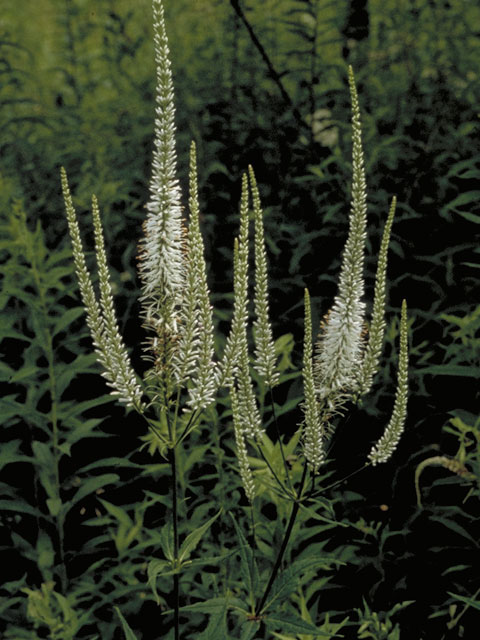
The unbranched stems of Culver’s-root grow 2-6 ft. tall and are topped by several spikes of densely-clustered, tiny, white flowers. The total effect is candelabra-like. Narrowly oval, dark-green leaves are arranged in whorls around the stem. The common name was to honour Dr. Culver who prescribed the plant as an effective laxative. (Lamb/Rhynard) Dense, narrow, cylindrical, spike-like clusters of small, white, tubular flowers are at the top of an erect stem over whorled leaves.
The genus name, a combination of Veronica and the suffix astrum (false), describes this plants resemblance to the Veronicas. It is the only species in the genus. It can be grown easily in wildflower gardens. The root contains a powerful emetic and cathartic.
Contact Us
City Hall
123 Conestoga Drive
Glasgow G1 5QH
Sign up to our Newsletter
Stay up to date on the city's activities, events, programs and operations by subscribing to our eNewsletters.